Party Leaders and Personal Brands — Jimmie Åkesson and the Language of Confrontation
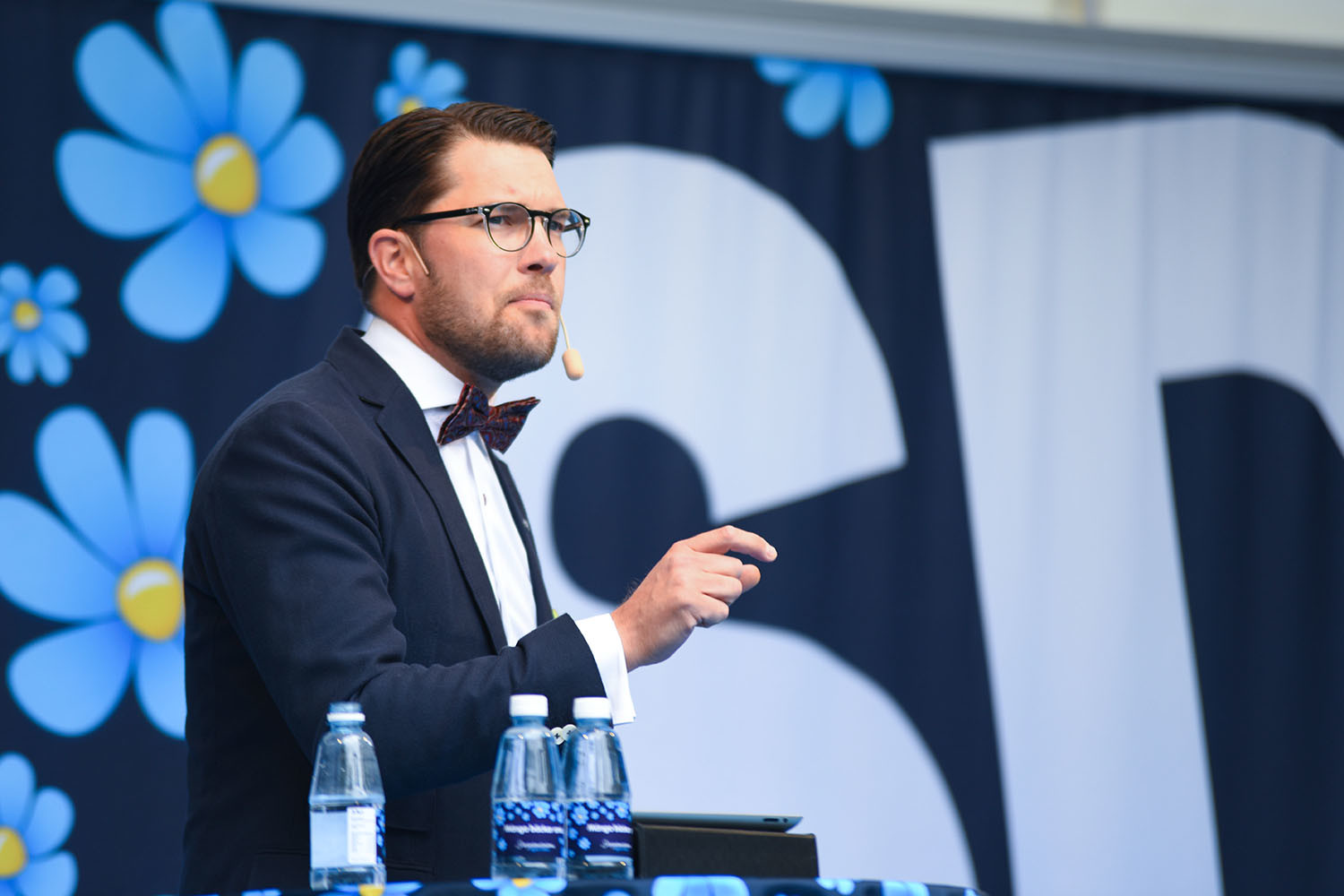
The suit says institution, the language still says opposition. Jimmie Åkesson has moved from the margins to the governing bloc without losing recognisability — and the gap between how he looks and how he speaks is now his strongest asset. The question is how long it holds.
Ahead of the coming election, we are looking at the personal brands of Sweden's party leaders and how they are being sharpened during the campaign.
Jimmie Åkesson is an unusually clear example of how a personal brand can evolve without the person becoming hard to recognise. When he took over the Sweden Democrats, a large part of his political position rested on standing outside the establishment; today he leads a party that has been a central part of the governing bloc for the entire mandate period, which places altogether different demands on how he presents himself. Ahead of the 2026 election, that shift is visible in the communication too, where the party combines an extensive personal campaign tour with messages about responsibility and political influence.
The wardrobe has grown into the role
Åkesson's visual expression has become considerably more formal over the years. Dark suits, white or light shirts, tie and pocket square appear often in more official settings, while a jacket without a tie is used when the tone is meant to be less formal. In images from Almedalen 2026, the style sits far closer to that of a traditional party leader than to the outsider position long associated with him.
At the same time, the glasses, the neatly combed hair and the beard create clear recognisability. That matters from a personal branding perspective, because it allows a person to change the level of formality without abandoning the visual markers that make him easy to identify.
The interesting thing, then, is not that Åkesson wears more suits. It is that the wardrobe follows the political journey he wants to signal. A party that wants to influence government also needs to look, visually, as though it belongs near it.
The language keeps the outsider
There is a deliberate contrast here, because Åkesson still uses a more direct, confrontational and everyday language than most other party leaders. In the ongoing campaign he continues to make hard demands of his opponents and to press for clear answers, most recently in attacks on Magdalena Andersson.
The result is that the suit says institution while the language still says opposition — which is, in fact, a rather effective combination for his brand. He can signal readiness to govern without letting go of the rebel position that built his recognisability in the first place.
My advice: strengthen the statesman without polishing away the contrast
I would not make Åkesson more formal than he already is, because there is a risk that an overly polished expression starts to feel borrowed. What I would do is work harder with the difference between situations: suit and tie dominating when he speaks about governing responsibility and international questions, a more relaxed style on campaign tours and in meetings with voters.
The real opportunity lies in the language. If the ambition is to further strengthen the image of a possible government politician, a few more constructive and forward-looking formulations could complement the confrontational rhetoric — without making him any less clear.