Byway Wants Us to Travel Without Flying — and Make the Journey the Point
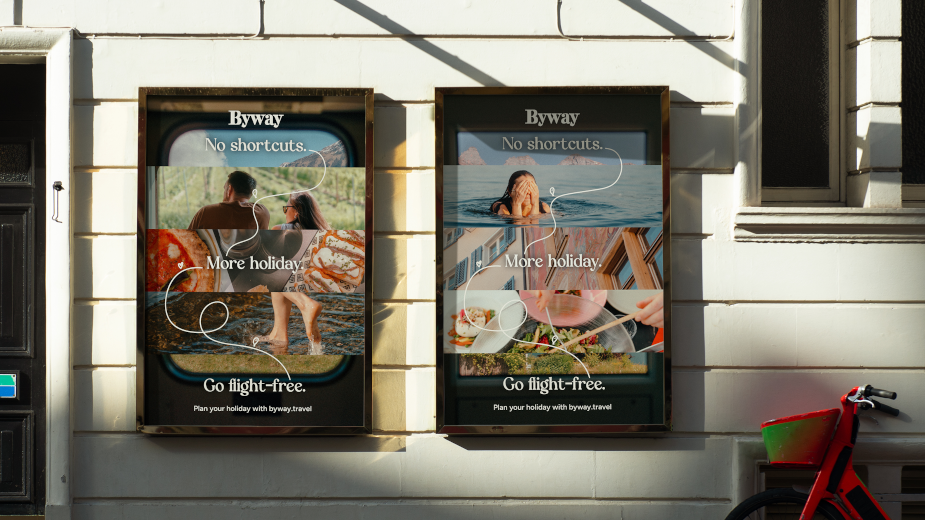
The British travel company Byway sells flight-free holidays. It wins not on the climate argument but by making the train, the ferry and the route there the thing you actually pay for — the curation is the brand, and the question is whether it survives growth.
Booking a European holiday usually begins with the same question: where are we flying to? The British travel company Byway would like us to stop thinking that way. The company, named by Wired UK as one of Europe's hottest startups, has built its entire business around trips where flying isn't simply avoided — the train, the ferry and the stretches in between become part of the holiday itself.
Byway was founded in 2020 by Cat Jones and sells personally planned trips through Britain and Europe entirely without flights. The customer says roughly where she wants to go and what kind of trip she's after, and Byway assembles the transport — trains, ferries and other overland routes — along with hotels, recommendations and support along the way. It could easily have become a dutiful sustainability concept. Instead, Byway has done something far smarter: it has packaged slow travel as something more appealing, more personal and, in some cases, more exclusive than the fast kind.
When slower suddenly becomes better
Aviation has spent decades selling speed. A few hours after leaving Stockholm or London you're standing in Barcelona, Nice or Rome, wondering which restaurant is genuinely "local" despite the entire menu being available in English. Byway inverts that logic, arguing in effect that the time between home and destination needn't be a necessary evil — because the journey itself can be part of what you're paying for.
It's a strong positioning move, because the company isn't primarily competing with other travel agents over who can find the cheapest ticket. Byway builds its offer around curiosity, small places, slower travel and the feeling that someone knowledgeable has already thought the route through on your behalf. On its own site, the company highlights personal itineraries with transport, accommodation, recommendations and support gathered into a single package.
Sustainability is of course a significant part of the story, but here I think Byway does something wise: it doesn't try to turn the holiday into a sacrifice the customer must endure for the sake of the climate. It sells an attractive travel experience first, and lets the flight-free option become part of that. Byway is also a certified B Corp, and states in its sustainability communication that many of the customers who have travelled flight-free with the company would otherwise fly — which is interesting, because it suggests they aren't only preaching to already-converted rail enthusiasts.
There's an important brand lesson in this. Sustainability rarely works as long-term premium positioning if the customer feels she has to accept an inferior product in order to be a good person. The genuinely strong offer emerges when the sustainable option also feels like the more desirable one.
Byway sells curation in a world with too many choices
Anyone who has tried to plan a rail journey through four European countries knows how quickly the romance evaporates somewhere between a German booking site and the news that a connecting train apparently runs only every other Thursday.
This is where Byway's most valuable commercial asset lies. The customer isn't only paying for tickets; she's paying to avoid spending hours deciphering the systems behind them. Byway turns complexity into simplicity — and makes the selection itself part of the brand.
It's the same mechanism we see in strong premium brands across fashion, design and hospitality. The customer doesn't need to be offered the most options; she needs to feel that someone with better judgement has already ruled out the bad ones. That gives Byway the chance to become more than a digital tour operator. It could become an arbiter of taste in European travel, where the name alone signals that a hotel, a small town or a rail route is worth discovering.
BBMB's recommendation: build a travel brand, not a booking engine
The biggest risk for Byway going forward, in BBMB's view, is letting the technology take up too much space in the communication. The in-house trip planning matters for the business to scale, but very few people sit at home on a Friday evening longing for an AI-powered multimodal journey planner. They long for three days in Piedmont, a small hotel they wouldn't have found themselves, and the feeling of being the person who discovered the place before the rest of Instagram did.
Byway should therefore keep shifting its profile towards lifestyle, culture and curation. A clearer editorial universe could make a real difference: guides, people, small hotels, restaurants, designers, local producers and routes that together define what a Byway trip actually is. The brand needs to become distinct enough that a customer can look at a destination and think "that feels very Byway" — even before she knows who's arranging the trip.
That sits close to how BBMB works with brand strategy, storytelling and brand experiences for premium and lifestyle companies: every touchpoint needs to tell the same story and contribute to the same positioning, rather than marketing, product and PR each living separate lives.
Cat Jones could become a bigger part of the story
I would also work more systematically with founder Cat Jones as a personal brand. She has a clear story behind the company, and has described how Byway was created to make travel over land and sea easier, and to help more people discover the pleasure of travelling without flying.
There's a great deal to build on there, because a founder can give a young company something a campaign can never quite buy: a human conviction behind the business idea. Jones could own a clearer international position on questions of the future of travel, overtourism, European tourism and how we'll come to value the journey itself. The company brand and her personal profile shouldn't say precisely the same things, but they should feel like two parts of the same story.
The real competitor is aviation's old idea of a holiday
Byway's most interesting opportunity is bigger than selling more train journeys. If the company succeeds, it could help shift the very idea of what a European holiday is — from getting to the destination as fast as possible, to the journey beginning the moment you close your front door.
Getting there requires Byway to stay selective. As the company grows, not every hotel, destination and partner can suddenly be made to fit simply to widen the range, because the curation is the brand. Lose that, and what's left is another booking platform — and Europe has plenty of those already.
It needs far fewer of them than it needs companies with a genuine idea of how we actually want to travel.